Showing posts with label transition. Show all posts

Monday, May 12, 2014

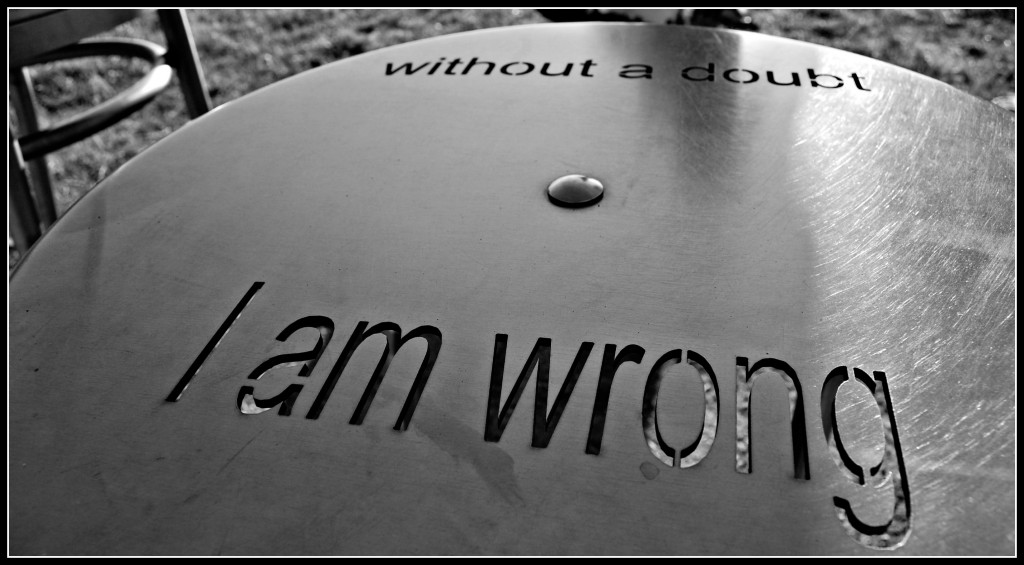
Turn it off.


I totally get this guy (picture).

On a more cereals note, there are soooo many ways to save energy, it's almost ridiculous.
I get that utility companies and energy companies provide jobs for some people and (huge) profits for others, but the thing is, do we REALLY need to keep increasing everything, as that old paradigm goes?

Where does it end? In the previous paradigm (which will not last, as it is self-destructive, and life in general isn't, so there you go), faster, better stronger was the norm. More profit. More stuff. More users.

On a finite planet? Oh, please. I should think enough people get the basic geometry of a sphere or, even simpler, a square. (Or checkboard, if you like.) When you fill it ALL UP, there's nowhere to go.

So how, I ask, can people naively think, that the companies/governments/individuals can compete and keep trying to outcompete each other? The faster they (we) do it, the faster we approach the limit.

Sadly, but also, luckily, the limit of the living (and non-living, physical) environment cannot be pushed. Sadly, and luckily, once we hit that slope downward, mmmm, it's going to be hard to stop the Runaway Train. Why? Because nature works in cycles and because we DO know of the positive (/negative) feedback loops.

It's like taking more drugs or medicines. In one day. You can take as much as you like. Low dose, you'll survive. Extreme overdose, you'll die. Just-over-the-limit-of-your-body dose, you'll die as well. (Without serious medical intervention.)

Because you see, I personally don't know many species or people or galactic creatures that I could call with Galax-Skype and say: "HEY, OUR PLANET GOT AN OVERDOSE. COULD YOU, UM ... COULD YOU COME AND FIX IT FOR US?"

So yeah.
Love your loved ones. And teach them to turn off the lights.
Use the bike. Eat meat and soybean a few times less per year. Do what you can.

And maybe, if enough of us do it, we make it.
Or maybe, there will be a tipping point in public opinion and push for legislators and politicians for a bigger change.

Remember, a single grain of rice can tip the scale. [Emperor in Disney's Mulan]

Got the picture from FB post, here.

Tuesday, March 18, 2014

Science fiction: Just another scientific article?

I think if you search through literature history, you'll find some book or other, from like, 50 or more years ago, that paint a picture so stark it's crazy and scary. Back then, it was called distopian futuristic sight. Now, it's just called 'another scientific report'.

The report will warn that the effects of human emissions of heat-trapping gases are already being felt, that the ultimate consequences could be dire, and that the window to do something about it is closing.
“The evidence is overwhelming: Levels of greenhouse gases in the atmosphere are rising,” says the report, which was made available early to The New York Times. “Temperatures are going up. Springs are arriving earlier. Ice sheets are melting. Sea level is rising. The patterns of rainfall and drought are changing. Heat waves are getting worse, as is extreme precipitation. The oceans are acidifying.” (1)

But to give you the gist, the 18-page report will try and put the whole science of the last four dacades or so into crisp, clear language. And they will try to promote the science and 'What We Know' across the globe, as they say, in a 'broad outreach campaign to put forward accurate information in simple language' (1).


Like I said, time and time again: we won't need popcorn, watching the news 20 years from now. Possibly, they'll stop making any sort of movies, apart from propaganda movies.

On the other hand, there is always hope.
Even when there is no more hope, when you think all is lost, there is always hope (2).


Take for instance, this guy, Paul Rosolie, who fights in and for the rainforests in the Amazon basin (3). And he warns that even though it may seem we've lost so much and yaddi-daa [environmental scaremongering of the past], there is still so much to save and do. Right NOW. And in the future.

I'll just post an excerpt here:
While the battle is currently ongoing, it's by no means lost, according to Rosolie. He points to a flight he recently took above the heart of the Amazon: "Green. For hours. We were traveling at 140mph and all we saw were trees, interrupted by oxbow lakes and marshes, and the golden rivers that look like anacondas lying across the earth. It was incredible. And during the flight I kept thinking how we always hear about the destruction, and how time is running out. And it is true. But what we don't hear, and don't know, is that there is still so much left to save." (3)


(1) Read more here: Scientists Sound Alarm on Climate, Mar 18 2014 | .

Got it via Naomi Klein's tweet, here.

(2) Losely after "Pittacus Lore, from I am Number Four. Quote here.

(3): Mother of God: meet the 26 year old Indiana Jones of the Amazon, Paul Rosolie, here.

Sunday, September 22, 2013

5 questions to help you spot inadequate (false?) climate-related reporting

When you read any news in the media (TV usually gives an even shallow-er overview), be sure to watch out for issues the below 5 questions point out to:
  1. who is the author of the claim and what his professional qualifications are (if it only says PhD or Dr., that doesn't mean the person is a climate scientist, a physicist, has extensive knowledge of meteorology, biology, ecology, is an environmental scientist or anything. And yes, sometimes, people not from these fields of science get called upon to give statements..)
  2. is the person citing specific scientific research or giving a 'general' claim, pointing to a myth, repetition of "what we all know" (but not really, as most of us are not scientists in the particular fields mentioned above)?  *
  3. is this specific research even linked to, referenced in the media item?
    (If not ... it means you might have to do additional research, before you could competently decide on the claims in the news item. Additional time that not many will take...)
  4. If you know or can figure out: who owns the particular media you are getting the news from;
  5. and affiliations of the owner, as well as the author of the claims to the money structures. (Looks specifically for fossil fuel industry and also for UN and government institutions, to be a bit more unbiased.)

With the above questions answered, you should be able to make a pretty good judgement as to whether the article/item in question is sound news reporting, is based on more than just speculation or belief, and whether any partial interests might have influenced it. [Unless you devote your entire week to it, you probably won't get a resounding yes! either way, but a better picture, get you will. [Yoda voice]]

*You can spice-up solving of question 2 by asking yourself, whether the title of the news item is a pompous one (though this can just point to the "sensationalism" in media nowadays) - and are the statements and claims made by the person(s) advocated in the news item also pompous and exaggerated or are they more moderate? **

** Note that as denial and attacks on persons and institutions involved in the climate science in the last couple of years intensified, so did the reporting from some of the scientists. From being moderate, even timid at first, quite some of them apparently decided it's time for more decisive "action" and stronger words, that should somewhat balance the otherwise pompous and screaming climate "denialism".

Also a good read might be Edward de Bono's book: I Am Right You Are Wrong: From This to the New Renaissance: From Rock Logic to Water Logic (link to description (Amazon)).

Friday, September 20, 2013

The Huffington post debate: Renewables VS oil, coal and nuclear

This serves as continuation (or a collection) of the whole debate on the Huffington Post news item titled Robert Redford Calls Alberta Oil 'The Dirtiest Oil On The Planet' In New Anti-Keystone XL Video (link).

I post part of the reply here, as the comments box is too small and I really wanted to give a comprehensive reply (that also shows the limitations of what I know (or think I know)).

The reply is whole as was meant (previous comments will be added in reverse order below later).


I totally agree with your first paragraph. Totally. It does not make any sense to stop all damaging activity (at least not without a magic wand to simultaneously address several problems).

As to the attainability of renewables, I am not so sure. Again, I don’t work in the industry, don’t have the 100% overview on ALL that is happening, but what I can tell you is that a) costs are falling rapidly, b) efficiency is going up (to a certain limit, granted) and c) environmental impact varies from tech to tech, but is generally considered lower than that of fossil fuel industry, coal and nuclear power plants. I give examples and quotes in the next reply.

I don’t feel capable on commenting on the case you build for nuclear, as I did no research in that field. As I understood, we’re not near fusion yet and fission creates waste (that to me, again, in the long run, is not sustainable. Unless we haul it into space (unethical? boomerang?, space debris).

I fully agree that wind and PV have intermittency problems, however, as you partly point out, sun does not shine ON ALL SIDES of the planet at once. With a global network, ... well, with other sources added (wind can operate at night), we can go pretty high in terms of energy self (local)-reliability.

Thanks for explaining the “Long Beach oil” and the purity of it, energy needed to purify it. Makes it more clear now. Thanks!
.
.
.
.
Costs
“Solar technology costs are falling rapidly. Chrystalline silicon PV module costs fell by 70 per cent 2008-January 2012 and are forecast to fall by another 30 per cent by 2015, without subsidies” (Assadourian et al., 2013: Loc 2067).

Energy demand estimates ... and meeting it with renewables
‘Estimates of energy required to meet the world’s continuously growing energy demand vary, and future energy use scenarios vary greatly in their outcomes. A medium scenario examined by European Union foresees doubling of current energy demand by 2050’ [“current” was 13.2 TW in 2011? and is 14 TW in 2012] (EC, 2006; Assadourian et al., 2013).
‘Instead of raising the number of nuclear power plants worldwide from 61 to 1200, based on the immense power that is radiated daily to Earth from the Sun (i.e., 5000 times the estimated requirements for 2050), if we could cover 1 % of the Earth’s land surface with solar panels operating at 10% efficiency, a rough estimate is photovoltaic power could generate around 25 TW’ (Peter, 2011).
  Problem is, as Peter (2011) points out, the availability of minerals. For example, cadmium (Cd) for the CdTe solar cells, to meet this demand, one would require amount of Cd for a factor of a 100 exceeding the identified world reserves (Peter, 2011; 3). But, new ways and new cells are underway (for more, see Peter, 2011).
  As to the environmental impact of Cadmium (from PV panels production) and other renewables, see Assadourian et al. (2013): they maintain (based on a number of sources) that renewables have lesser impact in total than fossil, though I would exclude biomass from it, as it appears to be the most unsustainable of the crowd.

And about meeting the energy demand in 2050, Assadourian et al. write: “Even with greatly limiting the areas for solar energy development /.../, the potential capacities are estimated at 340 terawatts (TW) for PV and 240 TW for CSP [concentrating solar power systems] – much more than projections for energy demand in 2050, even without any efficiency measures” (2013: Loc 2067).

Locally produced energy (which, granted, needs some more development and changes to the energy grids and distribution)

Another argument in favour of locally produced, renewable energy is (so I read) that of avoiding transmission and distribution costs. Renewable energy sources (e.g., wind, solar, small hydro, wave, and tidal energy), though having different impacts on the environment themselves (also in the book), “have the additional efficiency advantage of converting natural flows of mechanical energy or sunlight directly into electricity, unlike fossil fuel combustion and nuclear power, which require inherently inefficient thermal energy conversion processes.” (Assadourian et al., 2013: Loc 2053, link below).

From an abstract of a book titled Renewable revolution: low carbon energy by 2030 (Sawin & Moomaw, 2009):
Global energy scenarios offer wide-ranging estimates of how much energy renewable sources can contribute, and how quickly this can happen. Many scenarios show a gradual shift to renewables that still envisions a major role for fossil fuels for most of this century. This report examines the potential for renewable energy to provide needed energy services for all societies while lowering heattrapping emissions of greenhouse gases. It concludes that it is not only possible but also essential to effect a massive transformation of the global energy system from its current fossil fuel base between now and 2030 that continues for the rest of the century.

Carbon free?
Photovoltaic cells and panels have a CO2 release of one fifth of that of an average emission rate of conventional fossil fuel-generated electricity. This was calculated for DSCs, with a premise of an efficiency of 8 per cent and lifespan of 5 years, but the number grows even five times smaller for CdTe PV modules (Peter, 2011). Therefore, though not ‘carbon free’, the carbon of PV panels is small enough that a large scale implementation of PV can substantially provide for the world’s energy needs and at the same time addressing some of the problems of climate change (Elliston et al., 2013; Peter, 2011).


References

Assadourian, E., Prugh, T., Adamson, R., & Starke, L. (2013). State of the world 2013: is sustainability still possible?. Washington, DC [etc.]: Island Press.
(Assadourian et al., 2013: Loc 2053 : https://kindle.amazon.com/post/Sdj9B8pvQ-C70-q3GkZt0Q).

EC (2006). European Commission: World energy technology outlook 2050: WETO-H2. See
ftp://ftp.cordis.europa.eu/pub/fp7/energy/docs/weto-h2_en.pdf.

Elliston, B., Macgill, I., & Diesendorf, M. (2013). Least cost 100% renewable electricity scenarios in the Australian National Electricity Market. Energy Policy [In press]. DOI: 10.1016/j.enpol.2013.03.038.

Peter, L. M. (2011). Towards sustainable photovoltaics: the search for new materials. Philosophical Transactions of the Royal Society A: Mathematical, Physical and Engineering Sciences, 369 (1942), 1840-1856.

Sawin, J. L., & Moomaw, W. R. (2009). Renewable revolution: low carbon energy by 2030. Worldwatch Institute.) Link: http://www.cabdirect.org/abstracts/20103141191.html;jsessionid=623D63DEC4D6A3DFBDF201E7C4390340?freeview=true

Thursday, September 19, 2013

Challenge the world faces “today”, September 2013

Challenge the world faces “today”, September 2013, is whether climate warming “denialists” and “contrarians”, as well as PR people from the fossil fuel industry will be able to convince everybody else that IPCC was wrong, UN was wrong and that we don’t need to act, to change our way of living. And that is a dead wrong perception.
  I write about it extensively in the last weeks, as I’ve come to realisation that discussing* how much the world is warming up, and if it’s at all caused by humans, is IRRELEVANT. The climate debate aside, human society and production systems have such a great impact on the planet, that we’ve practically begun to terraform-it. As it was written before, human society has “become a geological force to reckon with”, thus, the term ‘anthropocene’ some people are giving the current era (See the Economist (2)).

Gist: we need to change. And change is hard. But necessary. Otherwise, the planet (so not the garden, not the local shop, not your country or the continent you are living on, but the PLANET will not be able to take it. And come ecosystems collapse, mass extinctions and decades of economic, cultural and other stagnation of human society. See below.

"The Cost of Ecological Overspending

Throughout most of history, humanity has used nature’s resources to build cities and roads, to provide food and create products, and to absorb our carbon dioxide at a rate that was well within Earth’s budget. But in the mid-1970s, we crossed a critical threshold: Human consumption began outstripping what the planet could reproduce." (1)


* [Referring to the IPCC AR5 media pomp, at the time of writing, yet to come.]
(1) See more: http://www.footprintnetwork.org/en/index.php/gfn/page/earth_overshoot_day/

(2): The Economist: The geology of the planet. Welcome to the Anthropocene. (May 26th 2011 |From the print edition):: http://www.economist.com/node/18744401

Saturday, September 14, 2013

Re-usable, re-constructible phone - Phonebloks

[Buzz of the week] A phone only lasts a couple of years before it breaks or becomes obsolete. Although it's often just one part which killed it we throw everything away since it's almost impossible to repair or upgrade. Visit www.phonebloks.com to show your support and raise your voice. via:


A good idea for a way to eliminate excessive electronic waste. Alas, still some way to go to the actual realisation and marketable product.

Luckily, in the meantime, here's the Fairphone, 'A seriously cool smartphone that puts social values first'. It's as sustainable as it gets at the moment. Or it tries to be, and that is a lot.
See why it’s fair and Technical specifications > on the page here: Fairphone.

Monday, June 3, 2013

Wind power: NIMBY-ism (Not In My Backyard) VS. WARYDU rhetoric (We Are Right; You Don't Understand)

Because it reads so nice, I am just going to copy-paste this paragraph from the "Acoustic Ecology Institute" (don't ask me what it is, I've never before heard of it) (Source: this here link):
 
From another page: link.
Modern wind turbines are massive structures, hundreds of feet tall, and often constructed in large wind farms that in effect industrialize rural landscapes, from the rolling grassy hills of California, to the vast rangeland of Texas, to ancient ridgelines in the Appalachians, to the commons in rural England. While the trade-offs may be worth it in some areas, the downsides have become more apparent. Resistance to wind farms is often belittled as NIMBY-ism (Not In My Backyard); but at the same time, proponents often slip into oversimplifeid WARYDU rhetoric (We Are Right; You Don't Understand). In most cases, industrial wind farms are complying with local noise limits; the issue has become whether these noise limits are sufficient to protect rural residents from irrevocable changes in the soundscapes of their homes and farms. If we are to forge a reliable energy future that is respectful of both the environment and the rights of neighbors, we'll need to move past knee-jerk reactions on both sides, and develop best practices that can ensure that the landscape and local residents don't become long-term casualties of today's "Klondike Wind Rush."


This caption is from the first site as well <link>:
How big are modern wind turbines? The ones on the left are 60m and 125m; the one on the right is 95m, with blades sweeping an area the size of a 747.
 

Friday, May 24, 2013

What if it's all a big hoax, climate cover-up and Kunt Vonnegut

What if we create a better world for nothing?

 An interesting read has been brought to my attention recently: Climate Cover-Up by James Hoggan.
"Climate Cover-Up names names, identifying bogus experts who are actually paid lobbyists and flaks. The authors reveal the pr techniques used to misinform, to mangle the language, and to intimidate the media into maintaining a phony climate change debate."...


 It is amazing, how many people continue to argue about it. I for one think it does not matter - we can just dispense with the climate change talk ... and try to deal with the rest of the shit. Inequality, corruption and environmental degradation, with a topping of species loss per day and riots because of too few owning too much. Well, but we've been there, haven't we? We did squat. Sooo, luckily for the planet and ALL its species (including us, humans), we'll face a crisis bigger than anything we've seen before. And then, we'll act. Loosing some billion human lives on the way, but we'll act. And I hope we then truly manage the world in a sustainable, custodian-guardian kind of way. Sigh.

I got the Big Hoax picture from the internet search (type in the text in the speech bouble and you will get it), but one for example is this one [the animated cartoon I don't really get in whole, I'm afraid].


Additionally, "what’s so radical about wanting to protect life-sustaining biosystems? About wanting to only consume as much energy and resources as is sustainable? And about wanting to build an economic system that is equitable?
And ‘equitable’ means equitable for all, including future generations
."

From a great Blog post that is designed to 'lift your spirits':
Was Kurt Vonnegut right (and if so, Now What?), by Mike Targett.

Sunday, May 12, 2013

Climate Change Summit 2040, To be held on Mount Everest

 
Will say something about this later, but for now:
2012 was the year the Kyoto protocol targets "ran out" (from 2007 - 2012, even though Kyoto was signed in 1997!).
As of now, we DO NOT have a binding international agreement ... not until 2015, when they will try to form another one.
... Which will ENTER in force probably in 2017 or as late as 2020.

... Can you see how ever increasing GHG emissions and environmental degradation, WHILE we talk and quibble (/squabble) about how best to do it will hinder us in the very goals we are trying to achieve?

Mind, there has been an increasing number of studies stating that the 2 degrees target* for the 2050/2100 will be increasingly harder to meet, since we're all going berserk and trying to race each-other in the unsustainable economy. They say that if the most strict emission abatements/reductions were applied by the developed AND developing countries, MAYBE we would JUST achieve the 2 degrees target.

I don't know how much you know about the planetary ecosystem resilience ... I know only enough to know I haven't got a clue. But I do "know" that it's going to be increasingly harder to survive.

See also my blog with many more links (interspersed with some rants, granted): http://aljobaljoenvironmental.blogspot.nl/

The photo is from The Economist, from Kal Cartoons (link also here), though I originally got it from a blog, here. Ha, I used in my MSc thesis presentation. You know, as the classical "end humour" photo.

Wednesday, April 17, 2013

Clean energy progress too slow to limit global warming: report

The IEA said that coal-fired generation grew by 45 percent between 2000 and 2010, far outpacing the 25 percent growth in non-fossil fuel generation over the same period. "Unless we get (carbon emissions) prices and policies right, a cost-effective clean-energy transition just will not happen," the report said.
http://www.reuters.com/article/2013/04/17/us-carbon-energy-warming-idUSBRE93G05A20130417