Showing posts with label policy. Show all posts

Monday, May 12, 2014

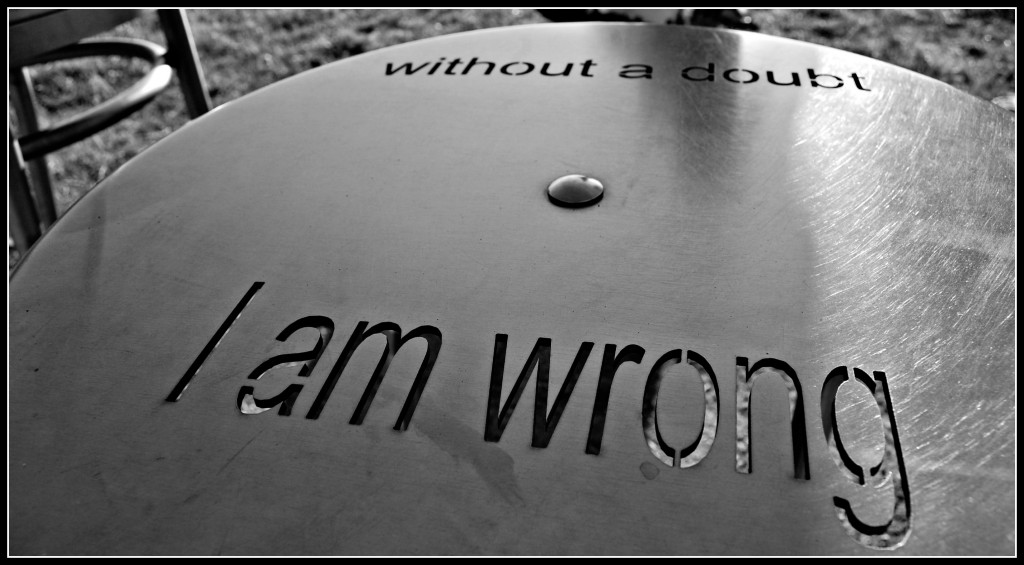
Turn it off.


I totally get this guy (picture).

On a more cereals note, there are soooo many ways to save energy, it's almost ridiculous.
I get that utility companies and energy companies provide jobs for some people and (huge) profits for others, but the thing is, do we REALLY need to keep increasing everything, as that old paradigm goes?

Where does it end? In the previous paradigm (which will not last, as it is self-destructive, and life in general isn't, so there you go), faster, better stronger was the norm. More profit. More stuff. More users.

On a finite planet? Oh, please. I should think enough people get the basic geometry of a sphere or, even simpler, a square. (Or checkboard, if you like.) When you fill it ALL UP, there's nowhere to go.

So how, I ask, can people naively think, that the companies/governments/individuals can compete and keep trying to outcompete each other? The faster they (we) do it, the faster we approach the limit.

Sadly, but also, luckily, the limit of the living (and non-living, physical) environment cannot be pushed. Sadly, and luckily, once we hit that slope downward, mmmm, it's going to be hard to stop the Runaway Train. Why? Because nature works in cycles and because we DO know of the positive (/negative) feedback loops.

It's like taking more drugs or medicines. In one day. You can take as much as you like. Low dose, you'll survive. Extreme overdose, you'll die. Just-over-the-limit-of-your-body dose, you'll die as well. (Without serious medical intervention.)

Because you see, I personally don't know many species or people or galactic creatures that I could call with Galax-Skype and say: "HEY, OUR PLANET GOT AN OVERDOSE. COULD YOU, UM ... COULD YOU COME AND FIX IT FOR US?"

So yeah.
Love your loved ones. And teach them to turn off the lights.
Use the bike. Eat meat and soybean a few times less per year. Do what you can.

And maybe, if enough of us do it, we make it.
Or maybe, there will be a tipping point in public opinion and push for legislators and politicians for a bigger change.

Remember, a single grain of rice can tip the scale. [Emperor in Disney's Mulan]

Got the picture from FB post, here.

Monday, February 3, 2014

An Abundance of Anything Analogy

After reading a newspaper article by a (self-proclaimed?) independent energy advisor, I had a few thoughts I'd like to share or start developing, at least. (Article is called "K nam hodi veter spat" and is accessible here.)

This reading requires an open mind.

In the article, it's mentioned that wind turbines do not require fuel to operate - which is true, apart from maintenance trucks and energy, stored/invested in replacement materials, if needed. And also, apart from taking up some energy of course, with their manufacture, transport and installation. (I am guessing solar panels have higher energy inputs till installation, but am not sure. Google Scholar it.)

But the author goes on to state a few troublesome things. Among them, he casually states that cats are murderers of birds, not wind turbines. Well, common sense that. Yes, of a few thousand small birds mostly. But have you ever seen a cat picking on a Golden Eagle? If anything, cats are on its diet list, not the other way around. Which is more than can be said for wind turbines, which are notoriuosly dangerous for k-strategists, long-lived, big animals with few offspring. Such as birds of prey.


Anyhow, to go back to the initial huff and puff.
  You know how we, the 'developed' world, took from indigenous people wherever and whenever we could? (Sure, first it was justified by God, then by Darwin, then by neo-liberalism and whatnot.) Well, now, enter the era of too much.

We've (and I'm saying mainly ''we", the affluent ones) polluted and dirtied the world and emitted so much ... we recognise maybe ... just maybe it's time to stop. (Take, for example, annual World Economic Forum in Davos, Switzerland. Read partly what I mean - lots of words, no action - here, in NY Times post Let’s Change the World. Cheers! | Subtitled: At the World Economic Forum in Davos, ‘Sustainability,’ ‘Mindfulness’ and Cocktails. See also a bit more from Kumi Naidoo (Greenpeace).)

  And then we have the balls to say to developing world: "Hey, um. We should all stop polluting."
"..." [muffled voices from the crowd]
"What? Yes, well, we did take the resources, but now this should all stop."
"..." [muffled angry shouting from the crowd]
"Yes, well. It would appear that we benefited ourselves, the westerners, wouldn't it. Hah hah. But really, it's not like that. See, we didn't know back then that all this pollution is unsustainable and can't go on forever. Now we do know. So, err... you should stop polluting."
"..."
"What? Oh, yes, I meant we should stop polluting. Unless we have those really costly clean technologies. But definitely no dirty technology. God, no. Clean as a glove!"
"..."
"Haven't you been listening? Yes, we did use dirty technologies, but now we know we shouldn't. So don't use dirty tech."
[And is later seen signing a contract with an African tribesman, for his company to come with machines and dig the rare ore. And is a month later seen moving the whole production of a textile industry into Asia, because the environmental standards are lower and labour force is cheaper.]

In one line: Benefiting ourselves on the account of others (and their resources), then telling them that they cannot do it - that's dirty. Nasty. [Or better yet: showing them pictures (movies, ads) of the glorious life in the west... and telling them: nope, you can't have it. Sorry. Time to stop consuming.]


In much the same way, I fear, go the wind energy developments.
First, we all (well, not really, the environmentalists/conservationists are divided) say: "oooh, that's nice. Clean energy." And it's true. It is much, much cleaner than the conventional types of energy production.
  But what happens when we fight for the inches?
And the electricity consumption still rises? And the world population still rises (creating unseen pressure on the (limited) natural resources)?

Having a wind farm by wind farm by wind turbine by wind farm will then create an impregnable wall of blades, cutting every birds loony enough to even consider passing through. Radical, yes. Let's downscale it.

Today, the electricity produced from wind grows between 10 and 20 percent per year. ["annual market growth of almost 10%, and cumulative capacity growth of about 19%", GWEC, 2014, under "Global Wind Energy: Solid Growth in 2012"] Which means, exponentially, as they calculate it often from the year before. (I think.) Okay...
So now, the wind turbines are not yet competing with arable land. Only with marine life (offshore instalments) and birds of prey in land installations.

  But what happens when we reach a certain limit? When more than one study ends up showing sharp declines in raptors? Thing is: studies take time (2-5 years). Disproving them (in the interest of the investors, let's call them "Big Wind", just for fun) takes time (1-5 years). Disproving them in turn, again, takes time. All the while, huge developments are continuing and the birds will be dying.

And then ... Germany says: "Hey, um. We should all stop building wind farms."
"..." [muffled voices from the crowd]
"What? Yes, well, we did seize the schnitzel by the curve, as we say, ha ha, but khem. You zee, the land ... the birds .. this schould all ztop nau."

Who tells whom to stop? The ones with 95 % energy coming from renewable energy sources (RES)? Denmark, Germany, (by then independent) Scotland, Spain, Greece, Netherlands? And all the while, we still keep the restaints on the CO2 emissions and you know, tell the other countries they really need to stop emitting.

It's not fair. It won't be. Yet I hope that by the time I close my eyes on this world forevermore, that the world will be fairer.
And you know what? I think not long after, it will be. Because the only way is the sustainable way. Whatever you say, nature (God?) intended it so. Look, consider this one simple, true and colossal statement:

Nature does not produce waste.

Sunday, September 22, 2013

5 questions to help you spot inadequate (false?) climate-related reporting

When you read any news in the media (TV usually gives an even shallow-er overview), be sure to watch out for issues the below 5 questions point out to:
  1. who is the author of the claim and what his professional qualifications are (if it only says PhD or Dr., that doesn't mean the person is a climate scientist, a physicist, has extensive knowledge of meteorology, biology, ecology, is an environmental scientist or anything. And yes, sometimes, people not from these fields of science get called upon to give statements..)
  2. is the person citing specific scientific research or giving a 'general' claim, pointing to a myth, repetition of "what we all know" (but not really, as most of us are not scientists in the particular fields mentioned above)?  *
  3. is this specific research even linked to, referenced in the media item?
    (If not ... it means you might have to do additional research, before you could competently decide on the claims in the news item. Additional time that not many will take...)
  4. If you know or can figure out: who owns the particular media you are getting the news from;
  5. and affiliations of the owner, as well as the author of the claims to the money structures. (Looks specifically for fossil fuel industry and also for UN and government institutions, to be a bit more unbiased.)

With the above questions answered, you should be able to make a pretty good judgement as to whether the article/item in question is sound news reporting, is based on more than just speculation or belief, and whether any partial interests might have influenced it. [Unless you devote your entire week to it, you probably won't get a resounding yes! either way, but a better picture, get you will. [Yoda voice]]

*You can spice-up solving of question 2 by asking yourself, whether the title of the news item is a pompous one (though this can just point to the "sensationalism" in media nowadays) - and are the statements and claims made by the person(s) advocated in the news item also pompous and exaggerated or are they more moderate? **

** Note that as denial and attacks on persons and institutions involved in the climate science in the last couple of years intensified, so did the reporting from some of the scientists. From being moderate, even timid at first, quite some of them apparently decided it's time for more decisive "action" and stronger words, that should somewhat balance the otherwise pompous and screaming climate "denialism".

Also a good read might be Edward de Bono's book: I Am Right You Are Wrong: From This to the New Renaissance: From Rock Logic to Water Logic (link to description (Amazon)).

Climate "denial", the media debate and whatnot

I repost this here, because I find it interesting, however, judge by yourself, as always.


John Abraham Slams Matt Ridley for Climate Denial Op-Ed in Wall Street Journal (via Desmogblog)

This is a guest post by Dr. John Abraham, in response to a Wall Street Journal op-ed by British House of Lords member Matt Ridley. How many climate errors in one article? A recent error-filled opinion piece by Matt Ridley in the Wall Street Journal…

Monday, June 3, 2013

Wind power: NIMBY-ism (Not In My Backyard) VS. WARYDU rhetoric (We Are Right; You Don't Understand)

Because it reads so nice, I am just going to copy-paste this paragraph from the "Acoustic Ecology Institute" (don't ask me what it is, I've never before heard of it) (Source: this here link):
 
From another page: link.
Modern wind turbines are massive structures, hundreds of feet tall, and often constructed in large wind farms that in effect industrialize rural landscapes, from the rolling grassy hills of California, to the vast rangeland of Texas, to ancient ridgelines in the Appalachians, to the commons in rural England. While the trade-offs may be worth it in some areas, the downsides have become more apparent. Resistance to wind farms is often belittled as NIMBY-ism (Not In My Backyard); but at the same time, proponents often slip into oversimplifeid WARYDU rhetoric (We Are Right; You Don't Understand). In most cases, industrial wind farms are complying with local noise limits; the issue has become whether these noise limits are sufficient to protect rural residents from irrevocable changes in the soundscapes of their homes and farms. If we are to forge a reliable energy future that is respectful of both the environment and the rights of neighbors, we'll need to move past knee-jerk reactions on both sides, and develop best practices that can ensure that the landscape and local residents don't become long-term casualties of today's "Klondike Wind Rush."


This caption is from the first site as well <link>:
How big are modern wind turbines? The ones on the left are 60m and 125m; the one on the right is 95m, with blades sweeping an area the size of a 747.
 

Friday, May 24, 2013

What if it's all a big hoax, climate cover-up and Kunt Vonnegut

What if we create a better world for nothing?

 An interesting read has been brought to my attention recently: Climate Cover-Up by James Hoggan.
"Climate Cover-Up names names, identifying bogus experts who are actually paid lobbyists and flaks. The authors reveal the pr techniques used to misinform, to mangle the language, and to intimidate the media into maintaining a phony climate change debate."...


 It is amazing, how many people continue to argue about it. I for one think it does not matter - we can just dispense with the climate change talk ... and try to deal with the rest of the shit. Inequality, corruption and environmental degradation, with a topping of species loss per day and riots because of too few owning too much. Well, but we've been there, haven't we? We did squat. Sooo, luckily for the planet and ALL its species (including us, humans), we'll face a crisis bigger than anything we've seen before. And then, we'll act. Loosing some billion human lives on the way, but we'll act. And I hope we then truly manage the world in a sustainable, custodian-guardian kind of way. Sigh.

I got the Big Hoax picture from the internet search (type in the text in the speech bouble and you will get it), but one for example is this one [the animated cartoon I don't really get in whole, I'm afraid].


Additionally, "what’s so radical about wanting to protect life-sustaining biosystems? About wanting to only consume as much energy and resources as is sustainable? And about wanting to build an economic system that is equitable?
And ‘equitable’ means equitable for all, including future generations
."

From a great Blog post that is designed to 'lift your spirits':
Was Kurt Vonnegut right (and if so, Now What?), by Mike Targett.

Sunday, May 12, 2013

Climate Change Summit 2040, To be held on Mount Everest

 
Will say something about this later, but for now:
2012 was the year the Kyoto protocol targets "ran out" (from 2007 - 2012, even though Kyoto was signed in 1997!).
As of now, we DO NOT have a binding international agreement ... not until 2015, when they will try to form another one.
... Which will ENTER in force probably in 2017 or as late as 2020.

... Can you see how ever increasing GHG emissions and environmental degradation, WHILE we talk and quibble (/squabble) about how best to do it will hinder us in the very goals we are trying to achieve?

Mind, there has been an increasing number of studies stating that the 2 degrees target* for the 2050/2100 will be increasingly harder to meet, since we're all going berserk and trying to race each-other in the unsustainable economy. They say that if the most strict emission abatements/reductions were applied by the developed AND developing countries, MAYBE we would JUST achieve the 2 degrees target.

I don't know how much you know about the planetary ecosystem resilience ... I know only enough to know I haven't got a clue. But I do "know" that it's going to be increasingly harder to survive.

See also my blog with many more links (interspersed with some rants, granted): http://aljobaljoenvironmental.blogspot.nl/

The photo is from The Economist, from Kal Cartoons (link also here), though I originally got it from a blog, here. Ha, I used in my MSc thesis presentation. You know, as the classical "end humour" photo.

Friday, April 26, 2013

Divestment movement, New York Times, Bill McKibben, Do the Math

It's time to post some of a more positive outlook. Ever heard of the Divestment movement?

Well, it just so happens that this interview with Bill McKibben (350.org; fathered projects like Connect the Dots, Do the Math) explains it well and cites some influential media in doing so:


"The New York Times, in what became the week's most e-mailed story in the paper of record, said the campaign could "force climate change back on to the nation's political agenda." A few days later, Time magazine ended its account of the mushrooming movement like this: "University presidents who don't fall in line should get used to hearing protests outside their offices. Just like their forerunners in the apartheid battles of the 1980s, these climate activists won't stop until they win.""

You might be interested to read more, here: Divest from Fossil Fuels. Now. (By Bill McKibben)

Wednesday, April 17, 2013

Clean energy progress too slow to limit global warming: report

The IEA said that coal-fired generation grew by 45 percent between 2000 and 2010, far outpacing the 25 percent growth in non-fossil fuel generation over the same period. "Unless we get (carbon emissions) prices and policies right, a cost-effective clean-energy transition just will not happen," the report said.
http://www.reuters.com/article/2013/04/17/us-carbon-energy-warming-idUSBRE93G05A20130417